Redesigning the Agency Value Model Guide
Redesigning the Agency Value Model Guide
The agency business model is under structural pressure. AI, automation and evolving procurement dynamics are reshaping how value is created, delivered and evaluated across markets. A staffing-based model, built for a different era, cannot reward efficiency in an AI-enabled world.
To remain competitive and financially sustainable, the VoxComm Board commissioned Redesigning the Agency Value Model, a new guide for agencies navigating the shift from effort-based revenue to clearly defined, outcome-led, scalable solutions. Guide available upon request.
.
Why Change Is Urgent
Across regions and disciplines, agencies are producing more work, faster, with better tools — yet margins continue to decline. Revenue growth remains tied to headcount, while procurement scrutiny intensifies.
If value continues to be defined by hours and staffing levels, agencies risk undermining the very innovation and expertise their clients depend on. The issue is not simply pricing. It is the underlying commercial model that connects how value is defined, delivered and monetised.
Agencies from all regions compete globally, and clients operate across borders. The transformation underway requires a coordinated, international response.
.
A Framework for Sustainable Growth
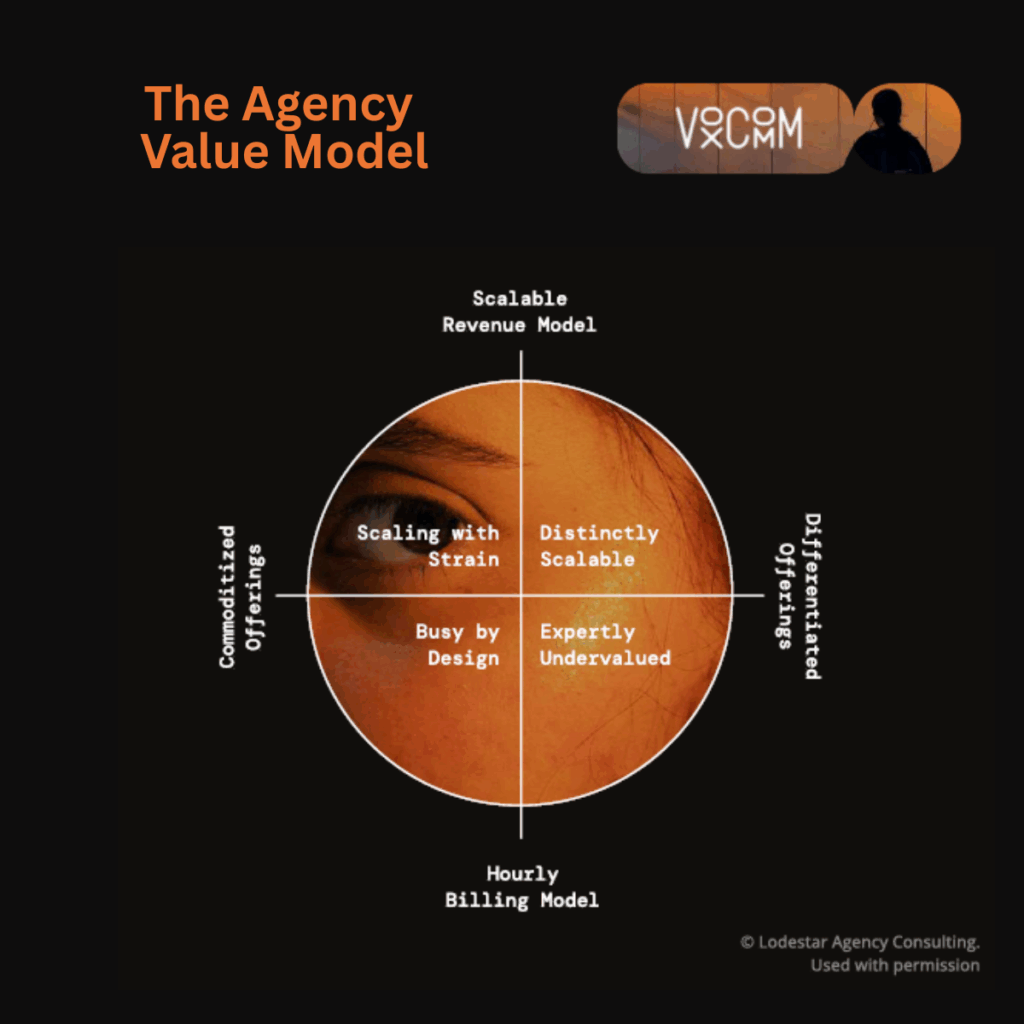
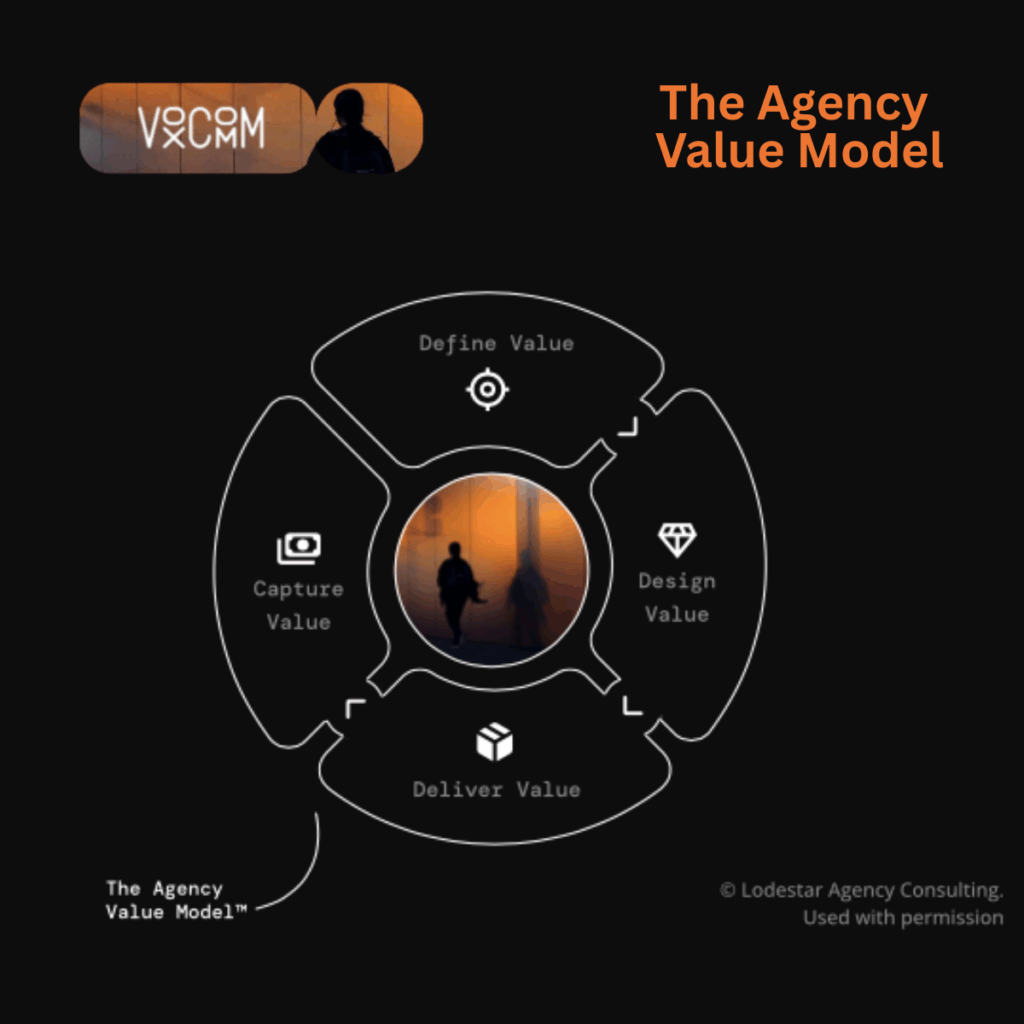
The Agency Value Model offers a structured approach to change. It helps agencies move from custom, effort-based work toward clearer, repeatable and scalable solutions aligned with measurable outcomes.
The model focuses on four interconnected dimensions:
➡ Clarifying the high-value problems an agency uniquely solves
➡ Translating expertise into structured, repeatable offerings
➡ Building delivery systems around outcomes rather than utilisation
➡ Aligning pricing with impact instead of effort
Agencies that make this shift decouple revenue from headcount growth, strengthen margins and build more defensible positions in the market.
.
A Stronger Partnership Model
This transformation is not about agencies alone. It strengthens client relationships as well. Clearer value definition, structured solutions and outcome-led models provide greater predictability, accountability and transparency.
When value is framed around impact rather than activity, both agencies and clients benefit. Negotiations shift from hours and rate cards to results and long-term growth. Procurement conversations become more strategic. The partnership becomes more balanced.
Agencies across the world are already starting to redefine how value is created and captured. The question is not whether change will happen, but whether it will be shaped deliberately.
By protecting creative competitiveness and aligning commercial models with the realities of AI-enabled work, we secure the long-term sustainability of the communications sector.
.
Resources